
Start here: build a search box
One worked example, one feature per page: the search box for a movie-night website. It ends live on the last page.
What a list is
A list is where your searchable data lives — a collection of results sharing the same fields, like a single table. A movies list has a title, a plot and a genre; a cinemas list has a name and a location. Every list gets its own live search API the moment it exists.
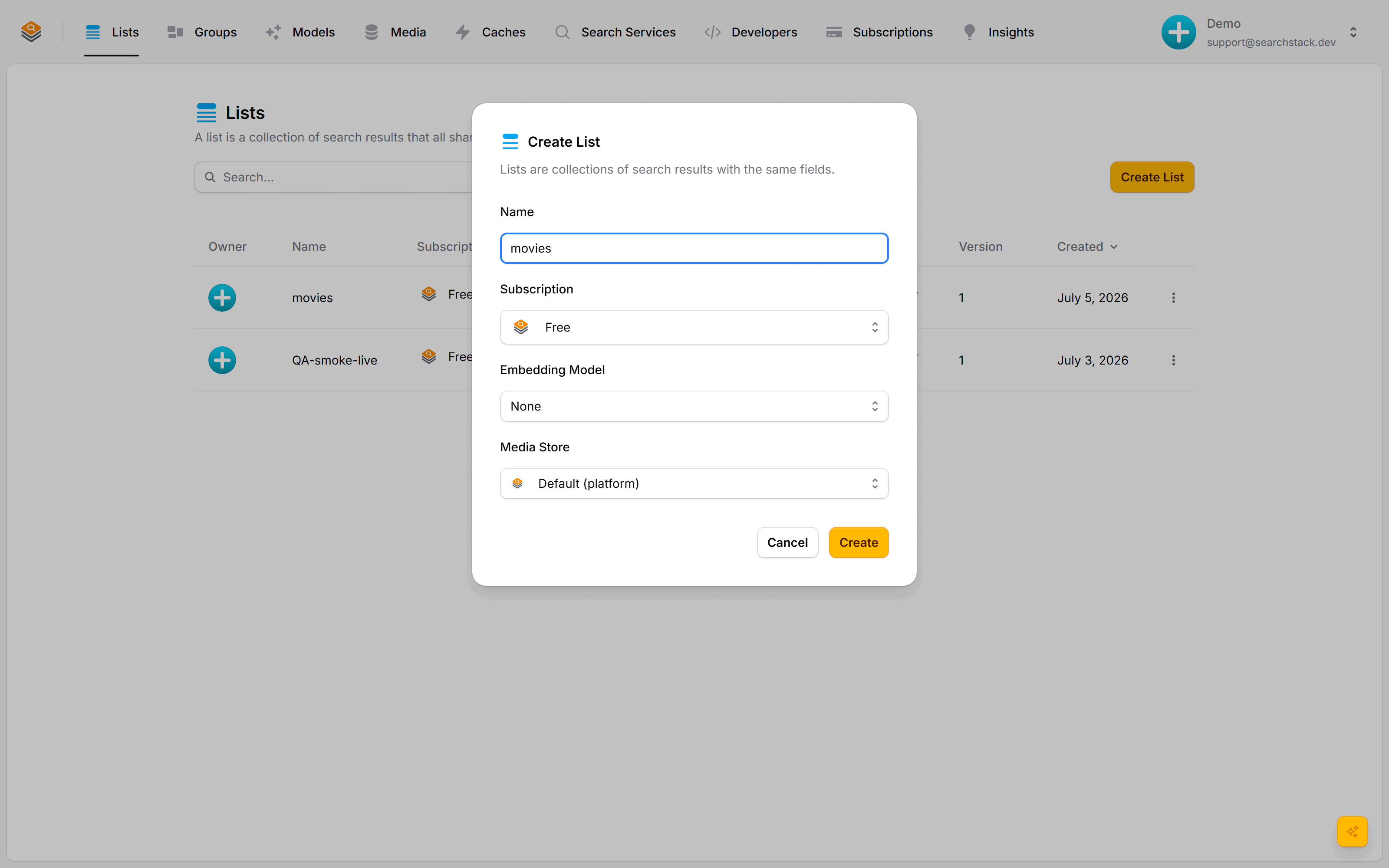
Sign in to the console, choose Create List, type movies and leave the rest on their defaults — free plan, no embedding model, platform storage. (Add a semantic model later, and a paid plan on Go live.)
Add a few movies
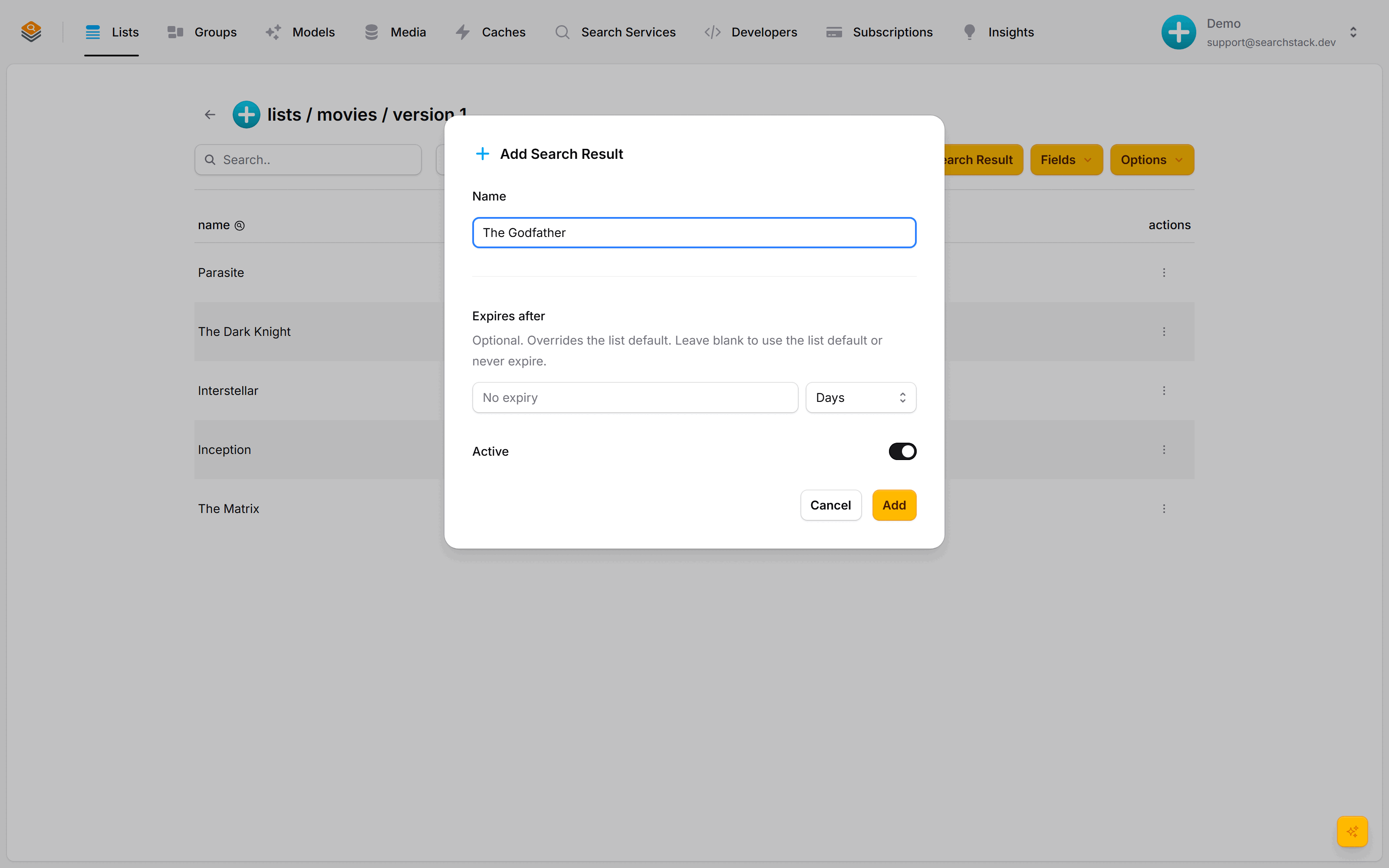
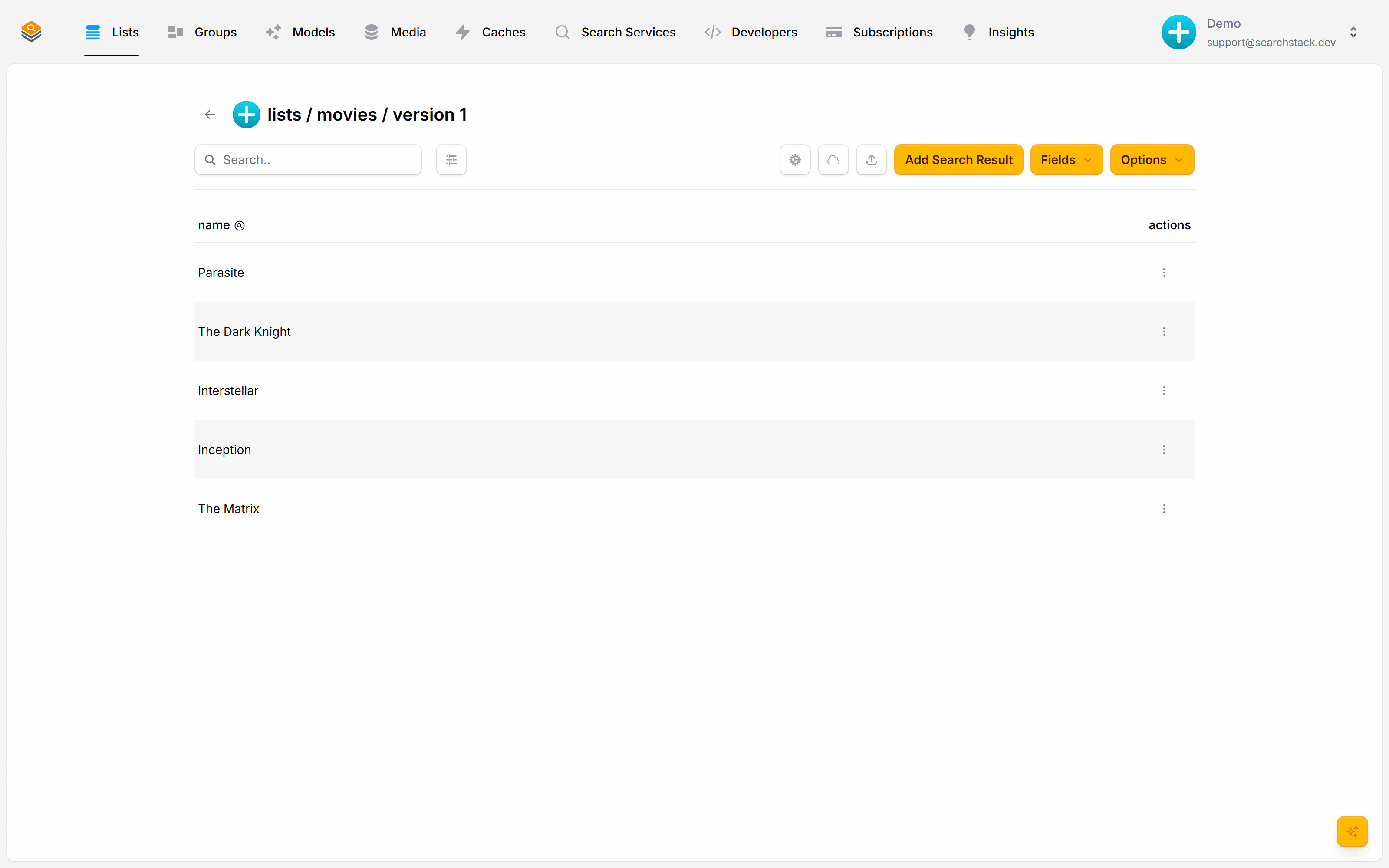
A single entry is a search result — here, a film. Open the movies list, choose Add Search Result, type a film title and save. A result needs nothing but a name to start. Add a handful.
You already have a working search API
- Live and read-only from the moment the list existed. Nothing to deploy.
- Base address
https://api.searchstack.dev/, with your API key in anX‑API‑Keyheader. - Create a key on the Developers tab; a read-only key is safe in a browser.
The three things a list can do:
- suggest – fast as-you-type completions, made for an autocomplete box.
- search – full search over your fields, returning complete results, paged, with filters applied.
- facet – counts grouped by a field's values, for building filter menus (you'll use this once your list has facet fields).
A suggestion as your visitor types inc. The version in the path is 1 for a brand-new list:
GET https://api.searchstack.dev/suggest/Demo/movies/1/inc
X-API-Key: {your key}
{
"results": [
{ "name": "Inception" }
],
"interpretation": null
}The search operation returns full results with a total count:
GET https://api.searchstack.dev/search/Demo/movies/1?query=dark
X-API-Key: {your key}
{
"results": [
{ "name": "The Dark Knight" }
],
"count": 1,
"total_count": 1
}A search matches only the film's name so far, because that is the list's only field.
How lists store data, related-result lookups and every option: the Lists reference.